
A Simple Sarasota Landscape Renovation Designed for Family Life
For Anastasiya Rybak and her family, improving the landscape around their Sarasota forever home was never about creating the most elaborate garden on the block. They wanted something that fit their life.
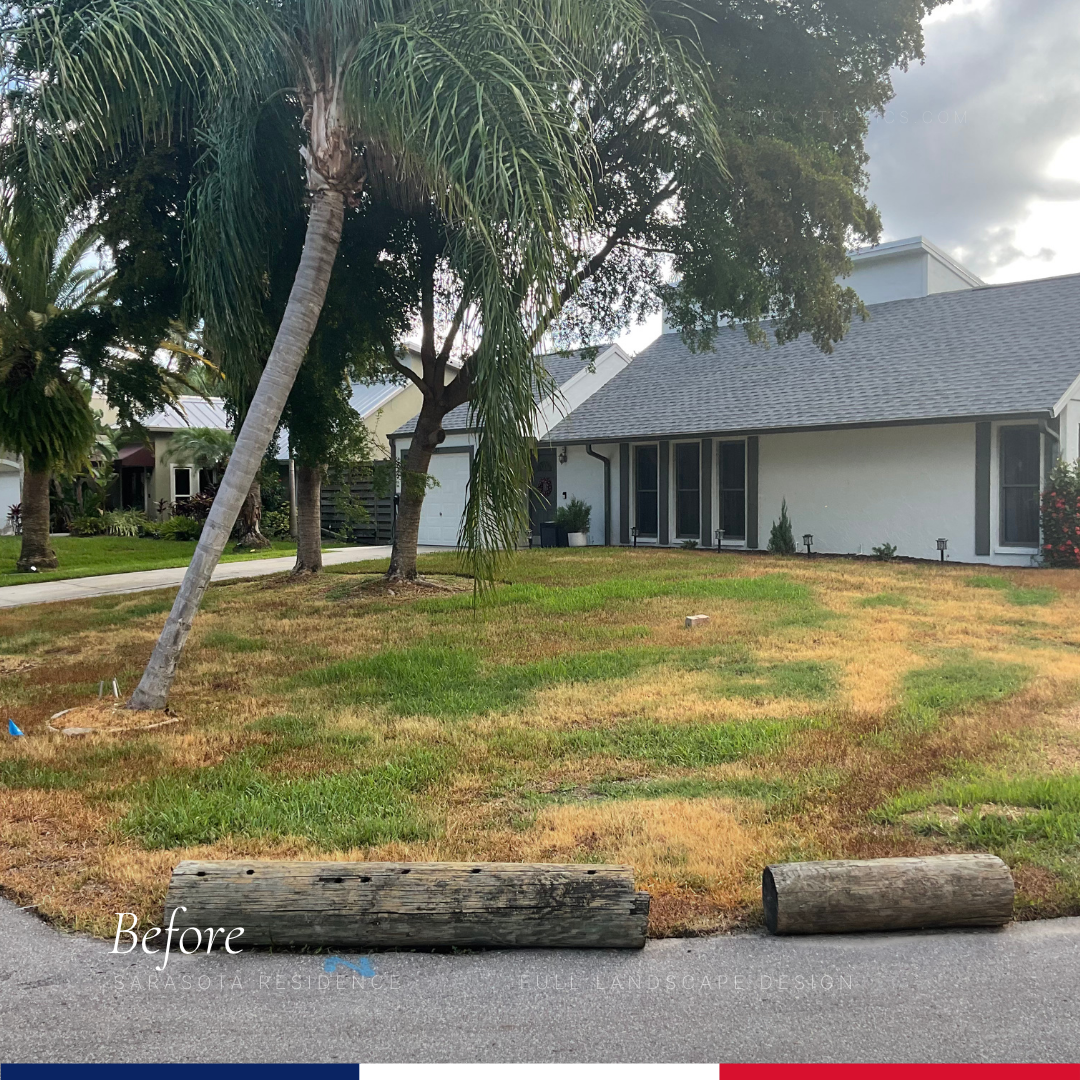
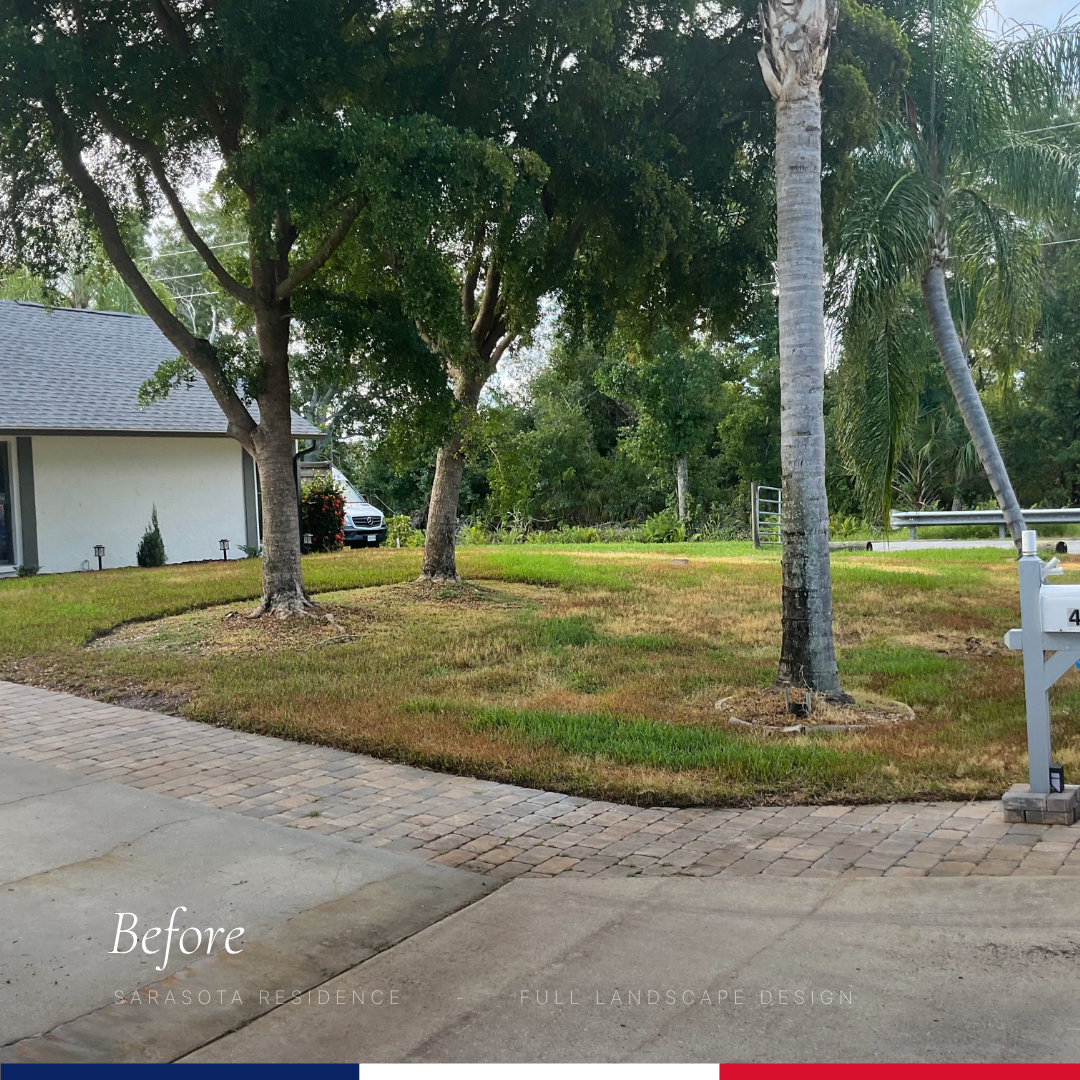
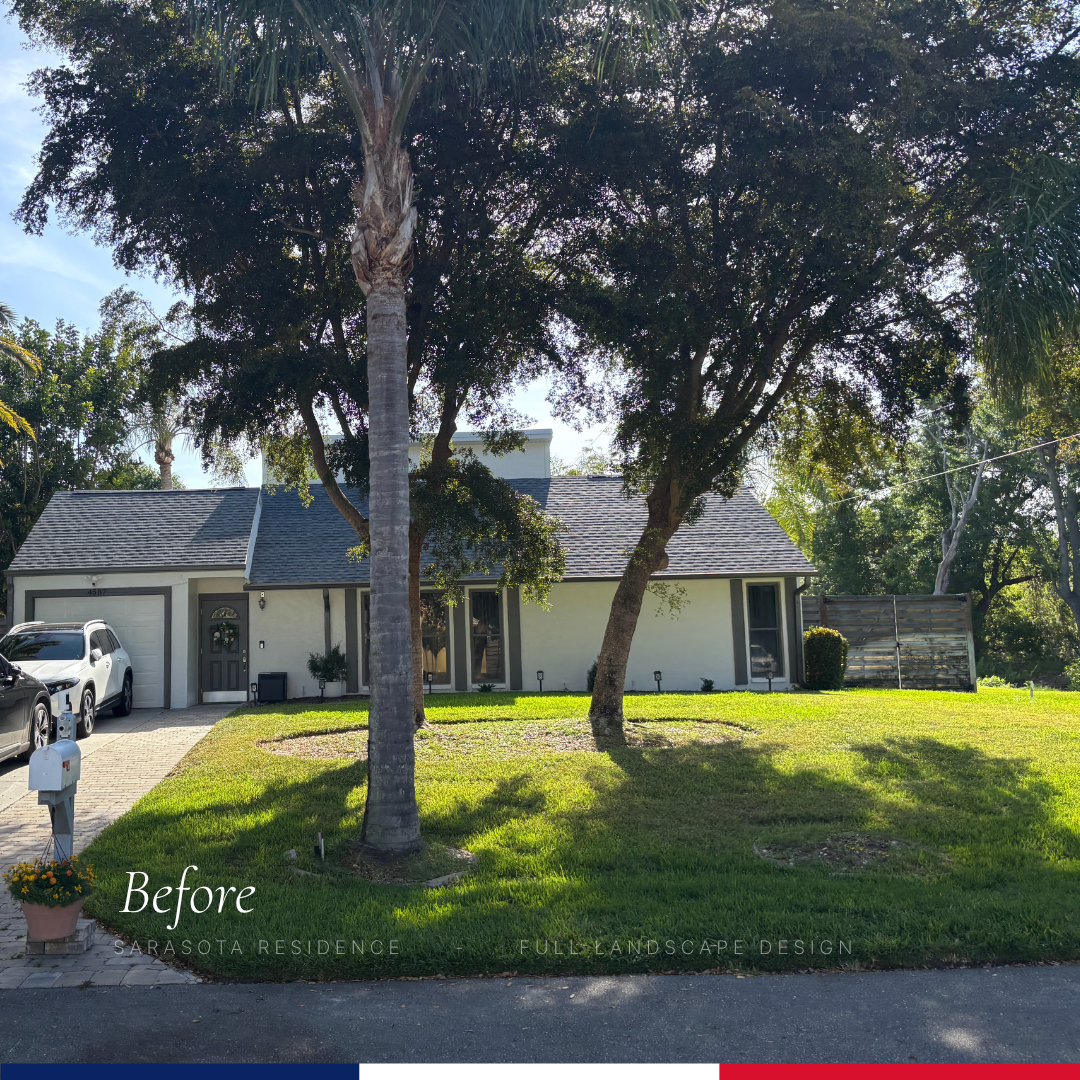
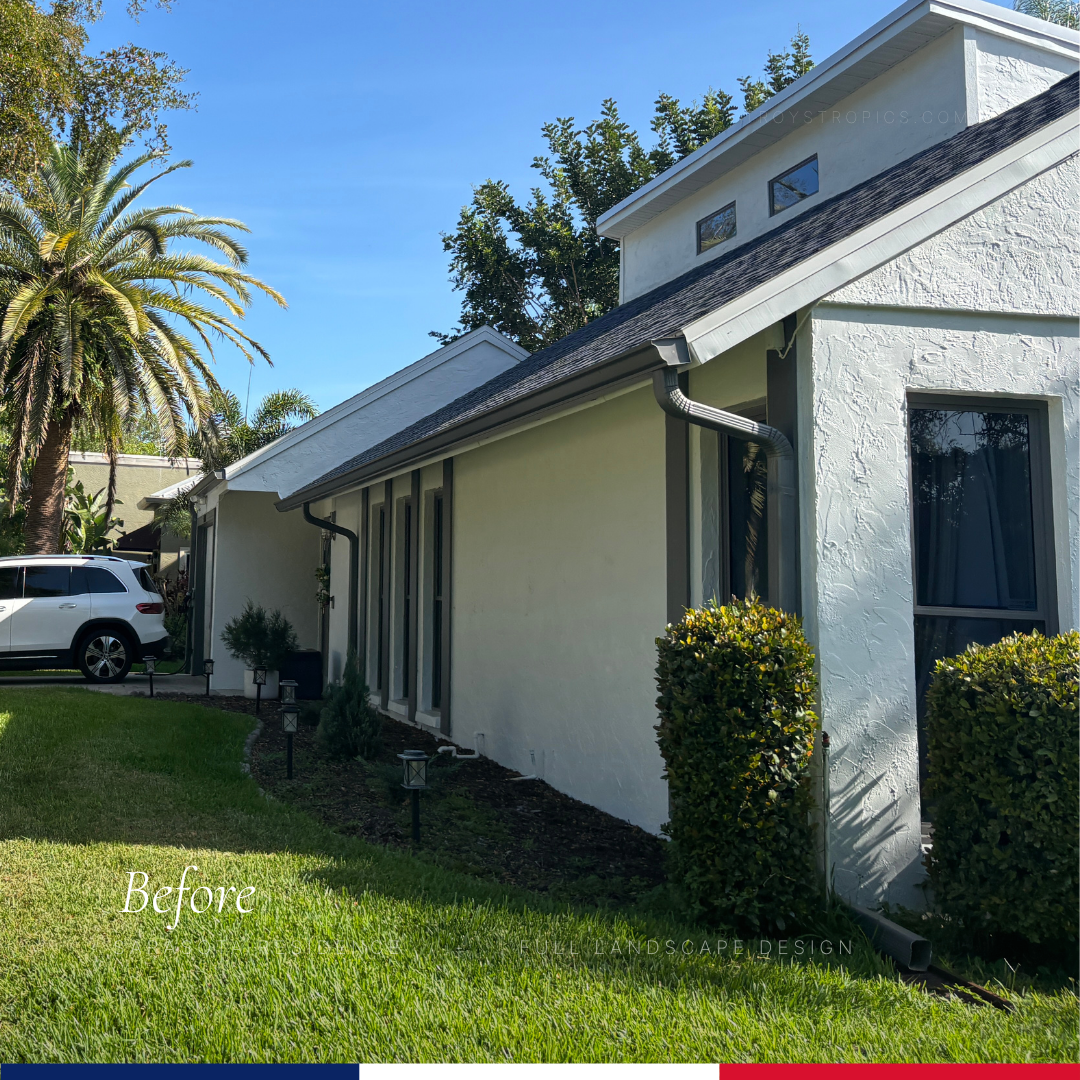
The existing landscape needed a refresh. The sod needed to be replaced. Drainage around the home could be improved. But the property also had mature oak trees and palms worth preserving, giving Troy’s Tropics a strong foundation to work from.
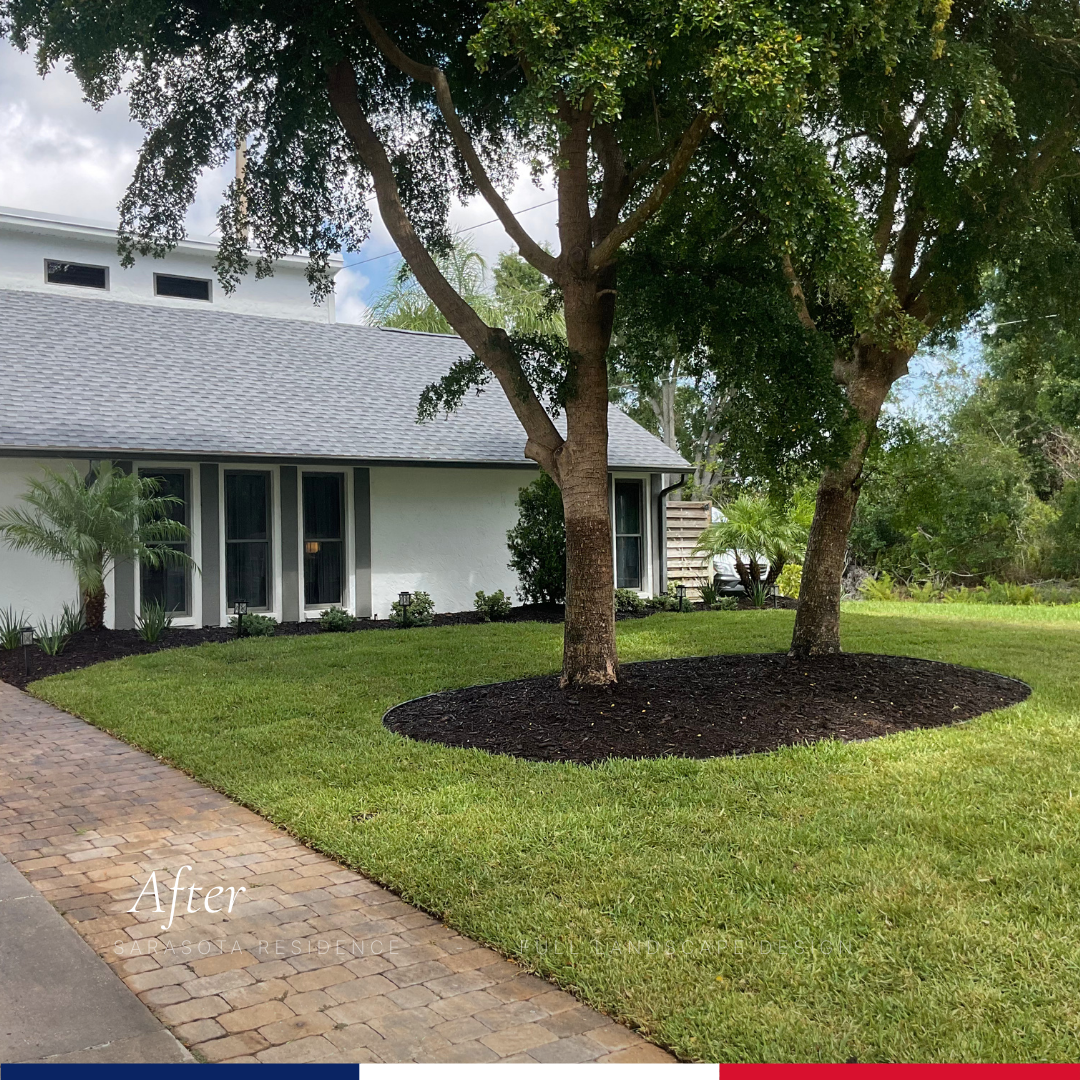
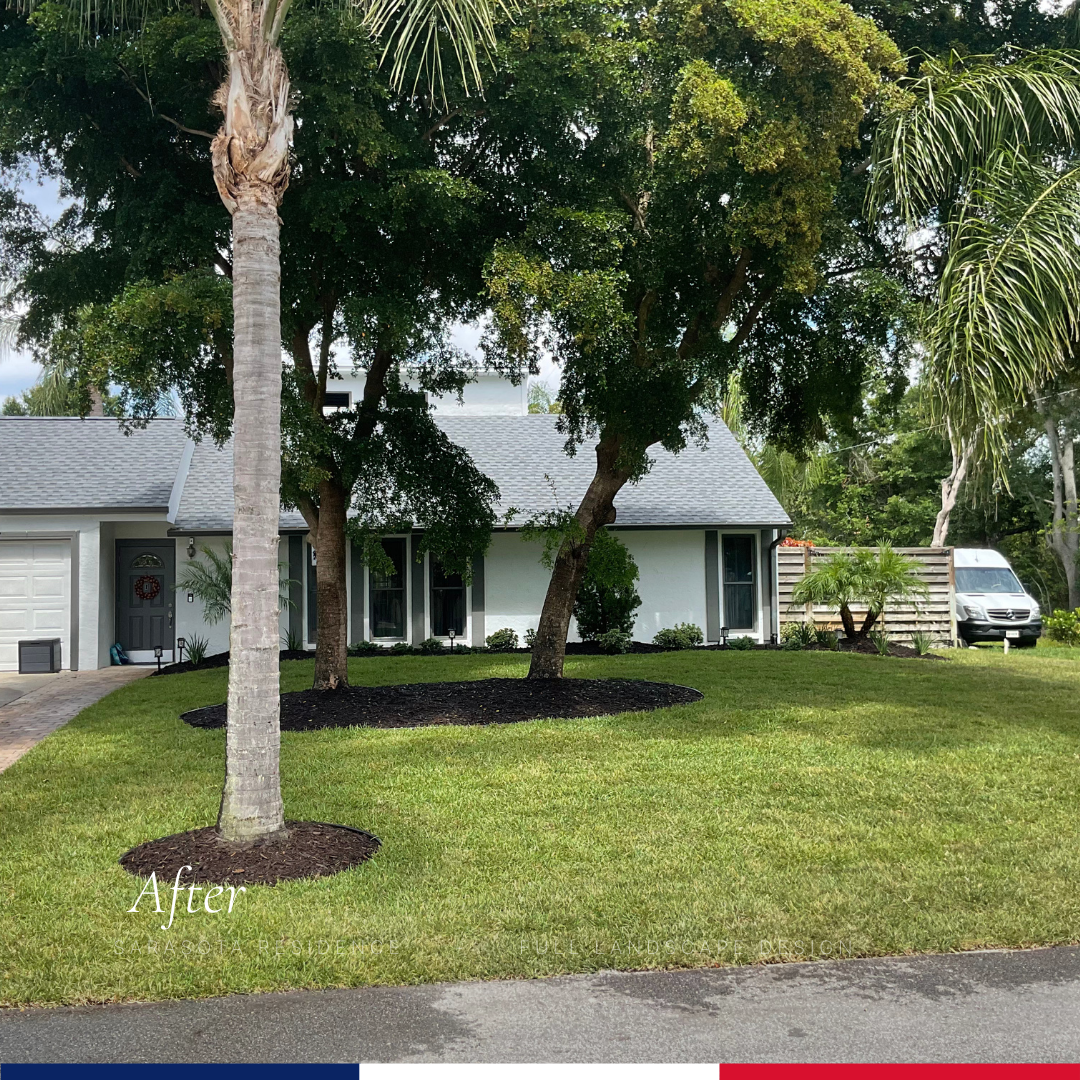
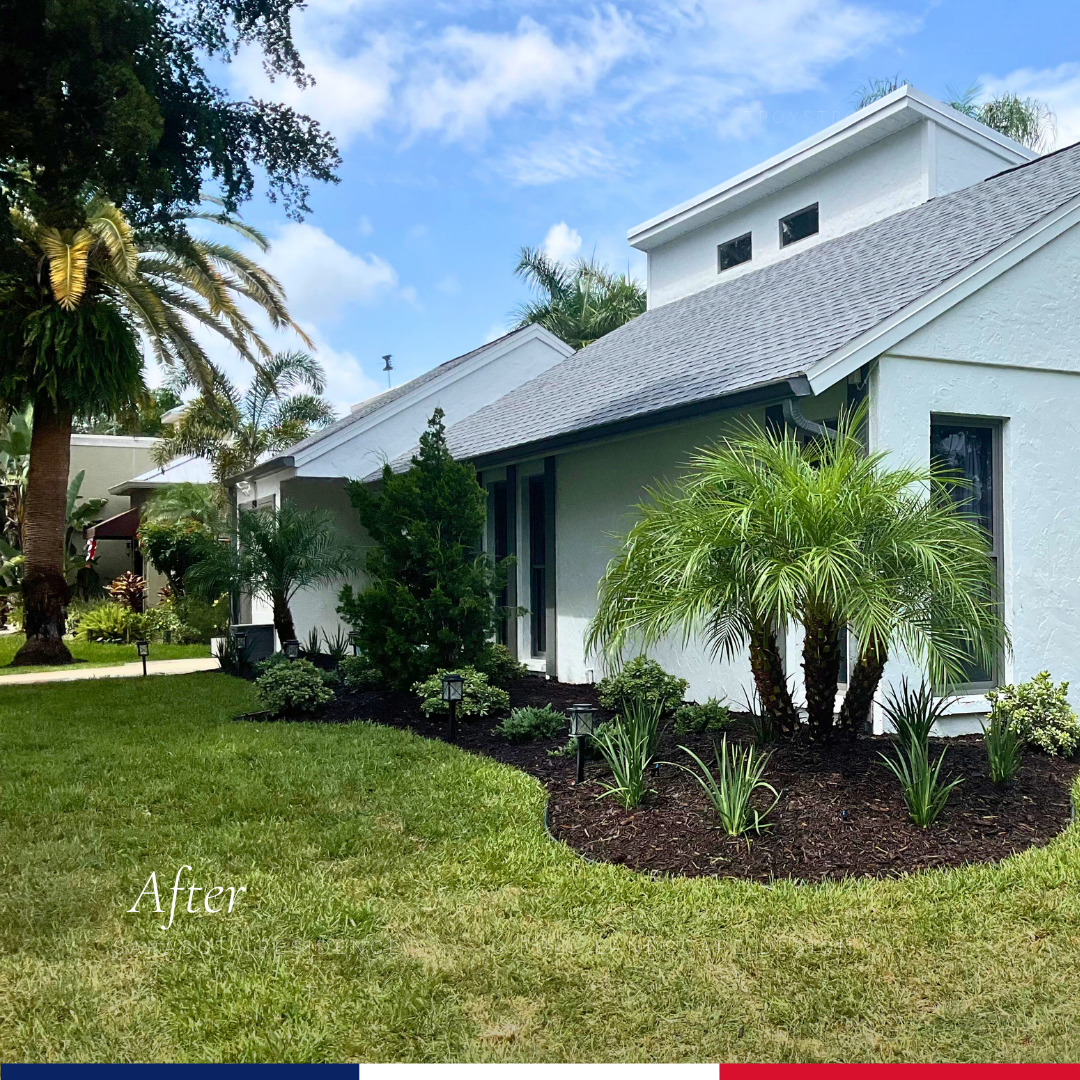
The goal was to create a landscape that felt finished and intentional without asking a young family to spend every weekend maintaining it. Troy’s Tropics renovated the planting beds, replaced the sod, modified portions of the existing edging, and added underground downspout extensions to help move water away from the home’s foundation.
The homeowners initially considered completing the work in two phases. Once they saw what the team had put together, they decided to complete the entire transformation at once.
For Charlotte, the designer behind the project, understanding how the family wanted to live with their landscape helped define the direction from the beginning.
Charlotte explained:
“They’re a young family, so they needed something maintenance-friendly and drought tolerant. They didn’t want a landscape that required them to be in the garden every weekend. The goal was to create something they could enjoy without constantly having to work on it.”
— Charlotte, Landscape Designer
That idea, a landscape designed to be enjoyed rather than constantly managed, became the thread running through the project.
How did Troy’s Tropics transform this Sarasota property?
Troy’s Tropics renovated the Sarasota property with new plantings and sod, modified landscape edging, and underground downspout extensions. The design preserved mature oak trees and existing palms while introducing a low-maintenance plant palette suited to the property’s partially shaded conditions and the lifestyle of a young family. On-site landscape construction took approximately four days to one week.

The Story at a Glance
The Setting
An inland Sarasota forever home with landscaping and sod ready for renovation, mature trees worth preserving, and drainage concerns around the house.
The Transformation
New sod and plant material, modified edging, and underground downspout extensions, all designed around the property’s existing oak trees and palms.
The Result
A clean, low-maintenance landscape with the curb appeal the family wanted, designed to mature without creating a demanding maintenance routine.
1. A Forever Home Changed the Priorities

This project mattered because the homeowners weren’t landscaping a house they planned to leave in a few years. This was their forever home.
The young family had been living in the Sarasota area for quite some time, and the property was somewhere they intended to put down roots. That made the landscape an important part of making the home feel complete.
But that didn’t mean they wanted more of everything. The property already had two large oak trees and established palms that gave the landscape height, shade, and maturity. Rather than replacing those features, Troy’s Tropics could use them as the framework for what came next.
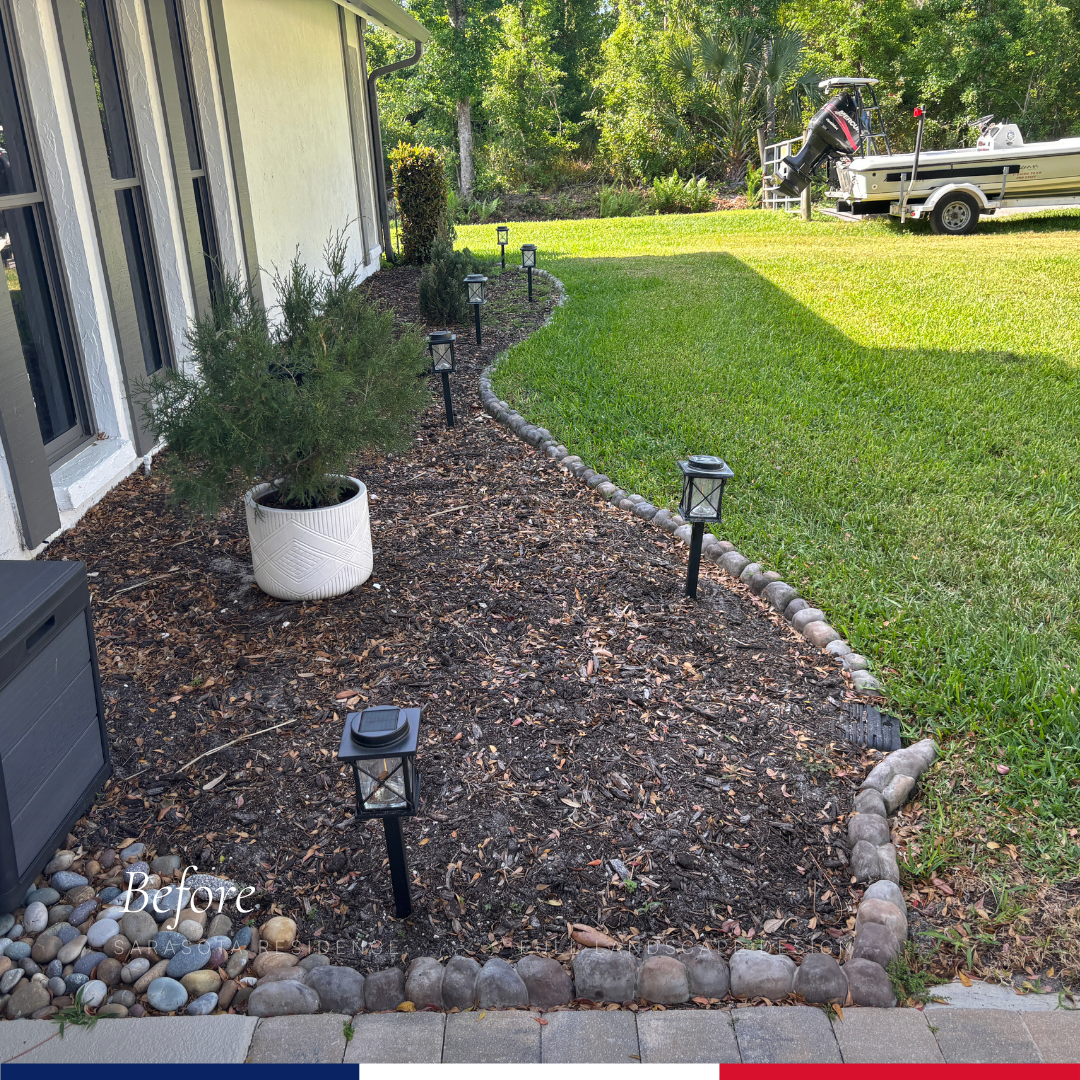
The lower portions of the landscape needed the attention. Existing plant material would be removed and replaced, the sod would be renovated, and the beds could be simplified around what was already working.
For Charlotte, the family’s lifestyle was just as important as the appearance of the finished design. The result needed to feel polished without creating a garden that demanded constant attention. That balance between curb appeal and everyday practicality shaped the decisions that followed.
2. What Started as Two Phases Became One Transformation
The homeowners didn’t necessarily begin the process expecting to renovate everything at once. There was some uncertainty around what the complete project would involve, so Troy’s Tropics gave them the flexibility to approach it in stages: begin with the landscape renovation, and return at a later date to replace the sod.
That changed once the homeowners saw what had been planned for the property. Charlotte recalled:
“They weren’t sure what the entire project would come in at, so we offered to do the job in two separate phases. We could start with the landscaping and come back later for the sod. They liked what we put together so much that they decided to do it all at once.”
— Charlotte, Landscape Designer
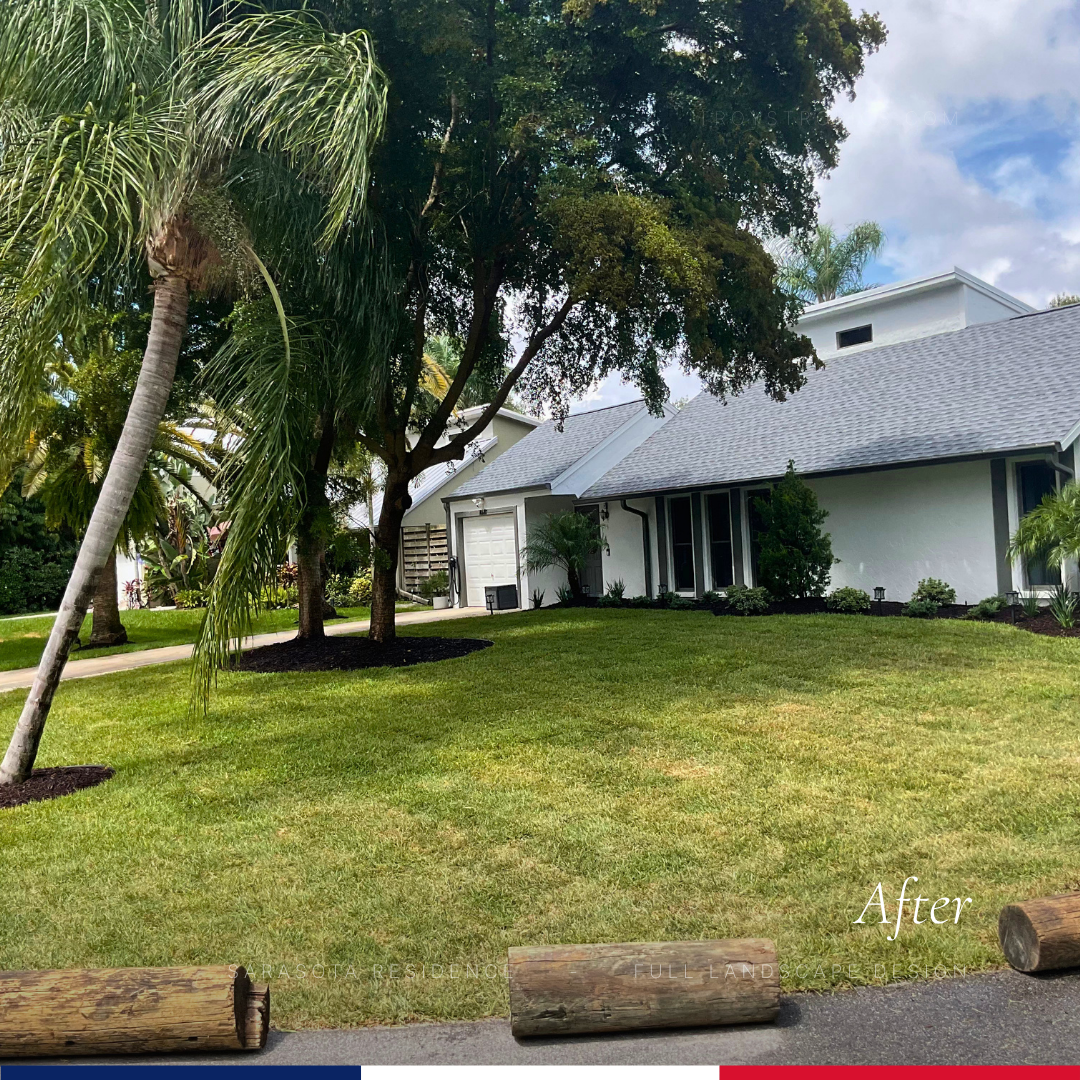
Instead of finishing the planting beds and leaving the surrounding lawn for another project, the team treated the visible landscape as one transformation. The plants, beds, edging, and new sod all came together at the same time.
3. The Renovation Went Beyond What You Could See
Plants and fresh sod create the most obvious before-and-after difference, but there was another issue the team could address while working on the property. Water needed a better path away from the house.
Troy’s Tropics extended the home’s gutter downspouts underground, allowing roof runoff to travel away from the immediate foundation area before being released into the lawn. Charlotte explained:
“We did the downspout extensions as well, pulling water away from the foundation of the house.”
— Charlotte, Landscape Designer
The extensions connect the gutter downspouts to underground lines that terminate at pop-up emitters within the sod areas. Charlotte described how the system works:
“We took the downspout leaders off the gutters and brought them underground. They’re connected to pop-ups that discharge into the sod areas.”
— Charlotte, Landscape Designer
Once the new sod was installed, much of that work disappeared from view. But it meant the renovation addressed how the property functioned along with how it looked.
4. Two Mature Oaks Helped Determine What Came Next
The two large oak trees were among the most established elements of the existing landscape, and keeping them meant designing around the conditions they created. Most importantly, they created shade.
Rather than choosing plants based only on appearance, Charlotte had to consider what would actually work around those existing trees. As Charlotte explained:
“With the two large oak trees, anything heavily dependent on full sun would have been the wrong choice. It really comes back to putting the right plant in the right place.”
— Charlotte, Landscape Designer
That principle, matching plants to the conditions already on the property, is also the first of UF/IFAS Extension’s nine Florida-Friendly Landscaping™ principles for sustainable design in Florida yards. The mature trees remained part of the property’s character, while the new lower-tier plantings were selected and positioned around them. Instead of fighting an established feature of the property, the new landscape worked with it.
5. New Plants Rebuilt the Landscape From the Oaks Down
With the major trees staying in place, much of the transformation happened closer to the ground. The existing lower-tier plant material was removed, while the oak trees and palms on the left side remained. Charlotte described the starting point:
“All of the lower-tier plants were removed. The mainstays were the oak trees and the palm trees on the left side.”
— Charlotte, Landscape Designer
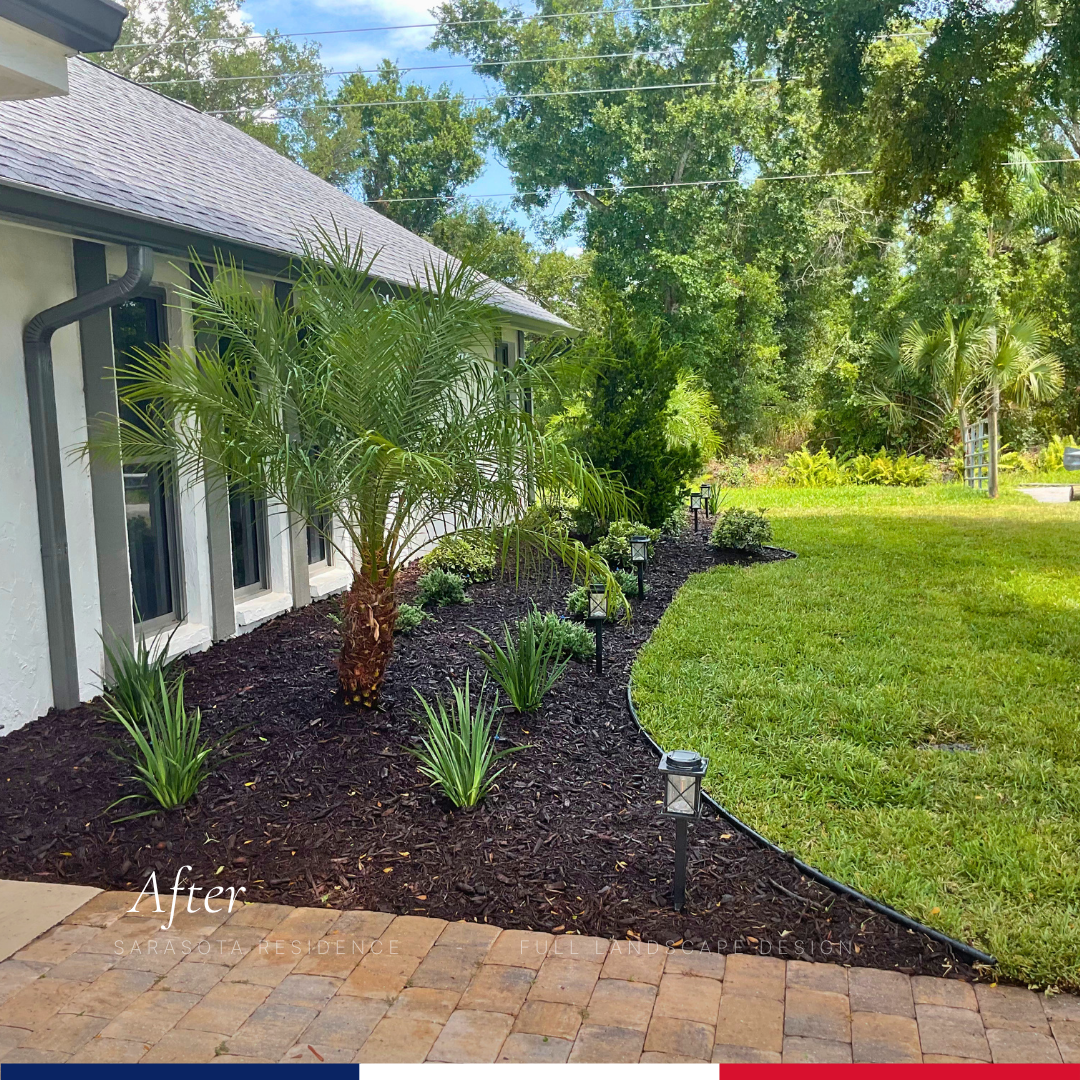
The new palette included Brodie juniper, variegated pittosporum, irises, and pygmy date palms. The larger Brodie juniper provided a stronger vertical element among the new material, while the remaining plants rebuilt the lower layers of the landscape around the mature canopy. The pygmy date palms added another recognizable Florida form without pushing the property toward the dense tropical look the family wasn’t asking for.
Unlike projects where the plant palette shifts considerably between the original design and installation, this one stayed consistent. Charlotte said:
“There were no changes to the plant material. What she asked for is what we delivered and what we installed.”
— Charlotte, Landscape Designer
The homeowner had asked for simplicity, and the design stayed true to that request.
6. Even the Edging Became Part of the Simpler Design
One of the smaller details Charlotte was watching during installation was the landscape edging. The project involved transitioning from a wider concrete paver edge to a thinner black Dimex landscape divider.
Charlotte initially thought that transition might create more challenges than it ultimately did. She recalled:
“I thought we were going to have a little more trouble with the edging because we went from a concrete paver to plastic Dimex, but it actually turned out really well.”
— Charlotte, Landscape Designer
The two materials create very different profiles. The existing concrete was wider and more substantial, while the Dimex provided a thinner separation between the landscape areas. For a project centered on a clean and uncomplicated design, the more understated edge fit naturally into the finished renovation. Sometimes the details that work best are the ones you stop noticing once everything comes together.
7. Four Days to One Week Brought the Pieces Together
By the time a landscape crew arrives at a home, plenty has already happened behind the scenes. Design time, planning, scheduling, sourcing, and lead time are separate from the actual construction period, and that distinction matters when talking about how long a landscape project takes.
For this renovation, the on-site landscape construction took approximately four days to one week. During that period, the team handled the new plant installation, sod renovation, edging modifications, and drainage improvements planned for the property.
What homeowners see happening over several days is the installation phase of a process that begins much earlier. Here, that preparation allowed several different pieces of the property to come together within one concentrated construction period.
8. The Landscape Was Designed for What Comes Next
A newly installed landscape gives homeowners an immediate transformation. A good design also considers what happens several years later.
On this property, the landscape is expected to become fuller without losing the simplicity that defined it from the beginning. The pygmy date palms will gain maturity, while the irises should continue filling in and giving the lower planting areas more presence. Charlotte explained:
“The pygmy dates will be a little more mature. I think the irises will have filled in as well.”
— Charlotte, Landscape Designer
What she doesn’t expect, or want, is for the property to turn into an overwhelmingly dense tropical garden. Charlotte described the long-term vision:
“It’s not a full tropical design. It’s low maintenance. They have a young family, so they’re not looking to go into the garden every weekend. They needed something maintenance-friendly and drought tolerant, something they can enjoy.”
— Charlotte, Landscape Designer
For this family, the answer was a landscape that could fill in and settle into the property over the years, not one that demanded more attention as it matured.
9. The Forever Home Finally Had the Curb Appeal to Match
The project began with a straightforward goal: create a simple landscape that worked for the family and the home where they planned to stay.
By the end, the aging lower-tier landscaping had been replaced, the lawn had been renovated, drainage had been addressed, and the mature trees that already gave the property character had become part of a cleaner, more intentional landscape. For the homeowners, the finished result was about more than new sod and plants. Their forever home finally had the curb appeal they had envisioned.
Anastasiya Rybak shared her experience in her Google review:
“We hired Troy’s Tropics for our front-yard landscape design and sod installation, and they absolutely exceeded our expectations. The team was incredibly professional from start to finish, clear communication, high-quality work, and beautiful results that perfectly transformed our property. I didn’t have to worry about a single thing; everything was handled smoothly and on time. Our ‘forever home’ now has the stunning curb appeal we dreamed of. Thank you! We’ll definitely be using them again for future projects. Thank you Charlotte, Josh and team!”
— Anastasiya Rybak
The family didn’t need the most complicated landscape Troy’s Tropics could create. They needed one that felt right for their home and the way they wanted to live there.
The mature oaks still provide the familiar canopy. The new plants can settle in beneath them. The pygmy date palms and irises can mature over the coming years. A forever home called for a landscape the family could actually enjoy for years to come, not one that added more outdoor work to their weekends.
Frequently Asked Questions
How long did the Anastasiya Rybak Sarasota landscape renovation take?
On-site landscape construction took approximately four days to one week, covering new plant installation, sod renovation, edging modifications, and drainage improvements.
What services did Troy's Tropics provide for this project?
Troy’s Tropics renovated the planting beds, replaced the sod, modified the existing landscape edging, and added underground downspout extensions to improve drainage, all while preserving the property’s mature oak trees and palms.
Why was a low-maintenance design important for this family?
The homeowners are a young family who wanted a landscape they could enjoy without spending every weekend maintaining it. The plant palette was chosen to be maintenance-friendly and drought tolerant while still delivering strong curb appeal.
Can Troy's Tropics design a similar low-maintenance landscape for another Sarasota property?
Yes. Every Troy’s Tropics landscape design begins with an on-site consultation and is tailored to the property’s existing conditions, the homeowner’s lifestyle, and long-term maintenance expectations.
Begin Your Own Landscape Transformation
Whether you’re working around mature trees already on your property, planning for a low-maintenance lifestyle, or simply ready for a landscape that finally feels finished, Troy’s Tropics can manage the complete design and installation process.
We bring the design thinking, local horticultural knowledge, and coordinated installation needed to create an outdoor space that fits how your family actually lives.
Related Reading
Sources & Further Reading
UF/IFAS Florida-Friendly Landscaping™ Program — The 9 Principles. Principle 1, Right Plant, Right Place, advises matching plant selection to a site’s existing soil, light, water, and climate conditions.